Estimates vary as to the number of people killed under the Khmer Rouge, but it is widely thought that the regime was directly responsible for the death of between 1.5 and 2 million people, or around a quarter of the population. Some of the casualties were executed, others starved to death, yet others died from overwork.
Throughout Cambodia one finds sites preserving the memory of what happened during this tragic period. None is as notorious, and attracts as many tourists, as the detention and interrogation centre of Tuol Sleng in the capital itself, and the killing fields of Choeung Ek on the outskirts, that were the scene of horrific brutality. But, as one tours the country, one discovers that dotted around are places to which people were transported to be executed before being thrown into mass graves. Battambang, where we spend a lot of our time in the course of our trips, is no exception.
TUOL SLENG
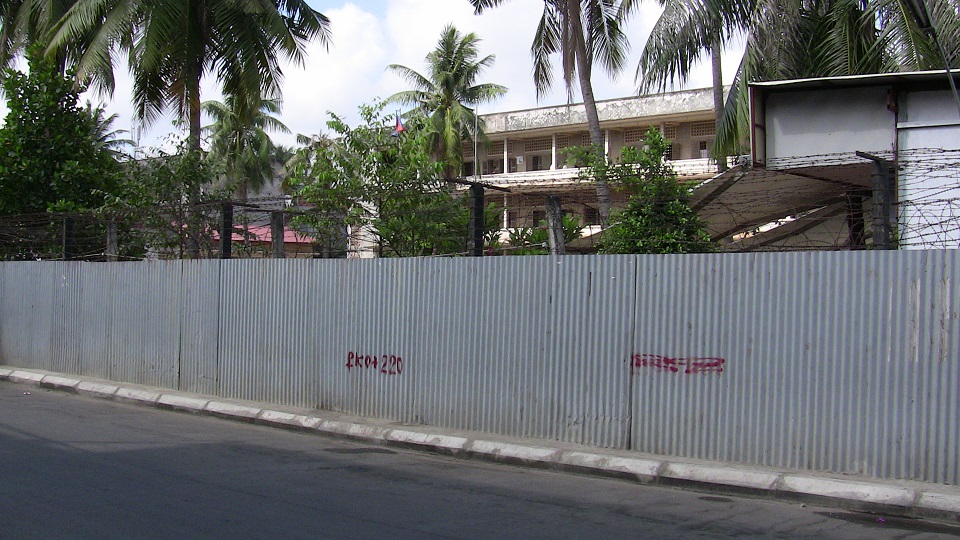
My initial reaction, when Tuol Sleng came into view on our first visit to the place was one of disbelief. How could these balconied blocks so similar in appearance to the high schools of my youth have served as a detention centre, a place for interrogating and torturing people?
I am not sure what I expected. If I pictured anything, it was something enclosed, walled in, turned in on itself and hidden from sight. Not buildings intended to provide education and empowerment.
Yet, on reflection, the perversion of the intention that had seen a school emerge from the ground and its transformation into the nerve centre of a system bent on eliminating educated people and silencing opposition seem to epitomise the barbaric nature of the regime far more tellingly than demolition and the choice of another building would have done.
Please view the video below, and when it finishes carry on scrolling down this page
Inside …
CHOEUNG EK
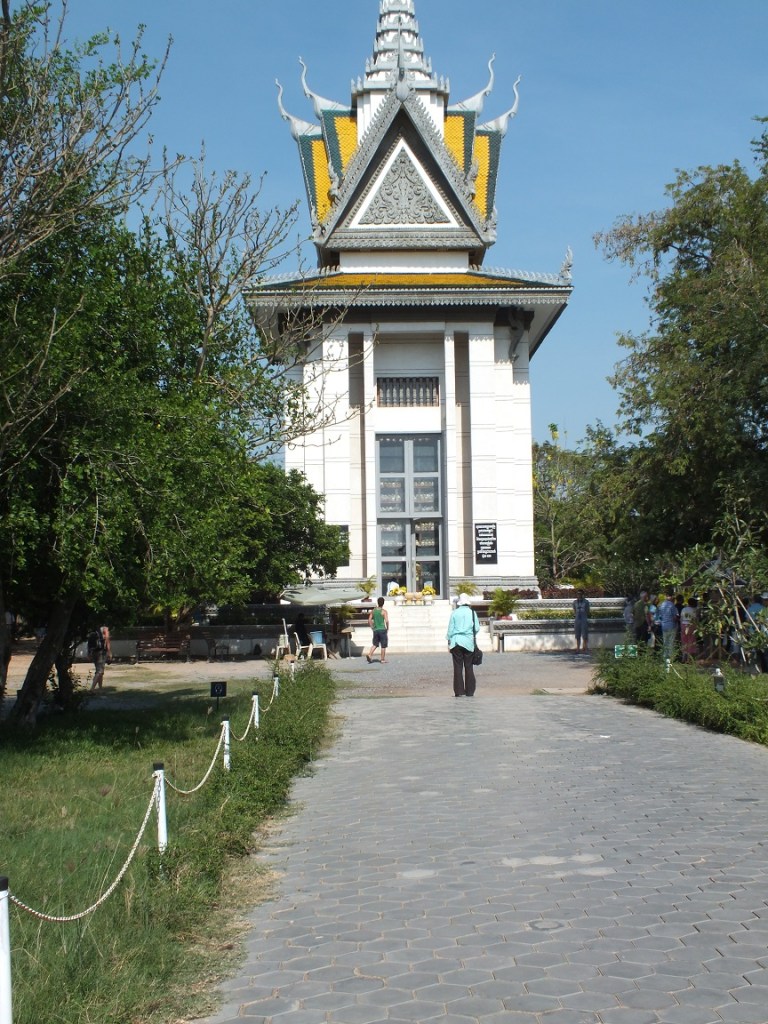
We did not go to Choeung ek, until after our second visit to Tuol sleng. A former orchard, Choeung Ek is open and airy, and, in its own way, as gruesome as Tuol Sleng. We wandered around the now peaceful paths, listening to our audio-guide. We stopped to look at the killing tree, against which babies were smashed, at the mass grave sites, and, as everyone does, in front of the thousands of skulls held in its iconic stupa.
Well of Shadows, Wat Samrong Knong – BATTAMBANG
Killing sites can be places you might easily pass by unaware that many people lost their lives there. Take the Well of Shadows in the grounds of Wat Samrong Knong, an old Buddhist temple 6 kilometres North of Battambang, the oldest in the province. What draws your eye, the busy part, is the beautiful ornate pagoda and you might not go any further.
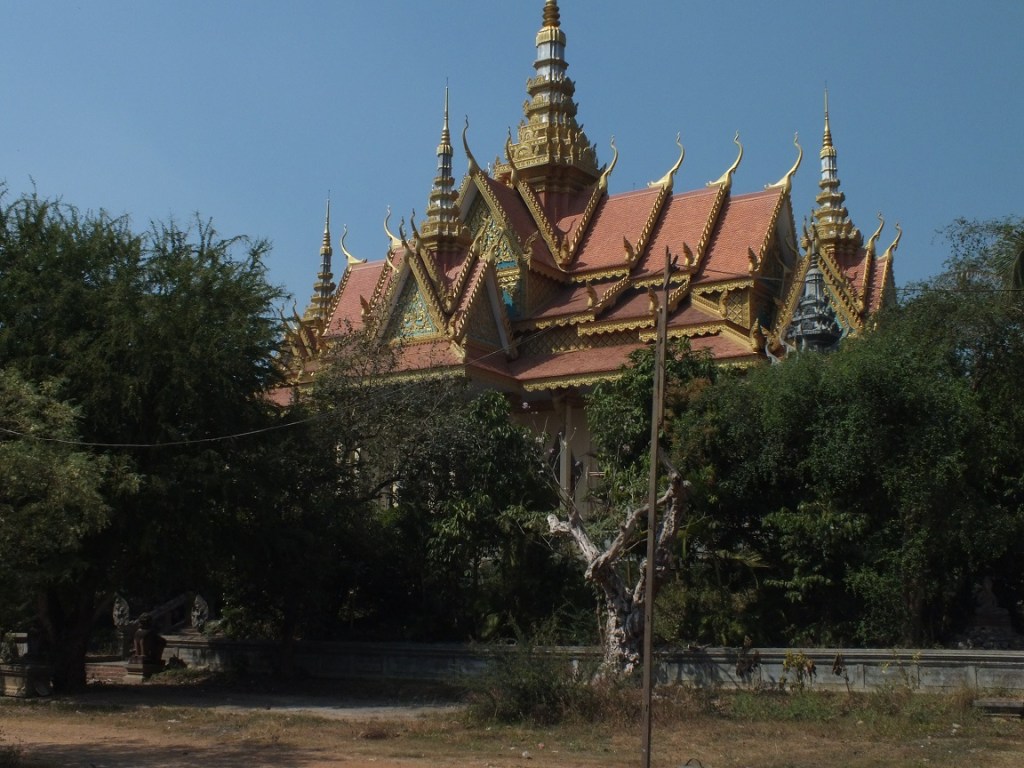
But if you carry on, undeterred by the understated character of the approach to the core of the extinction site, then the gruesome history of the place unfolds.
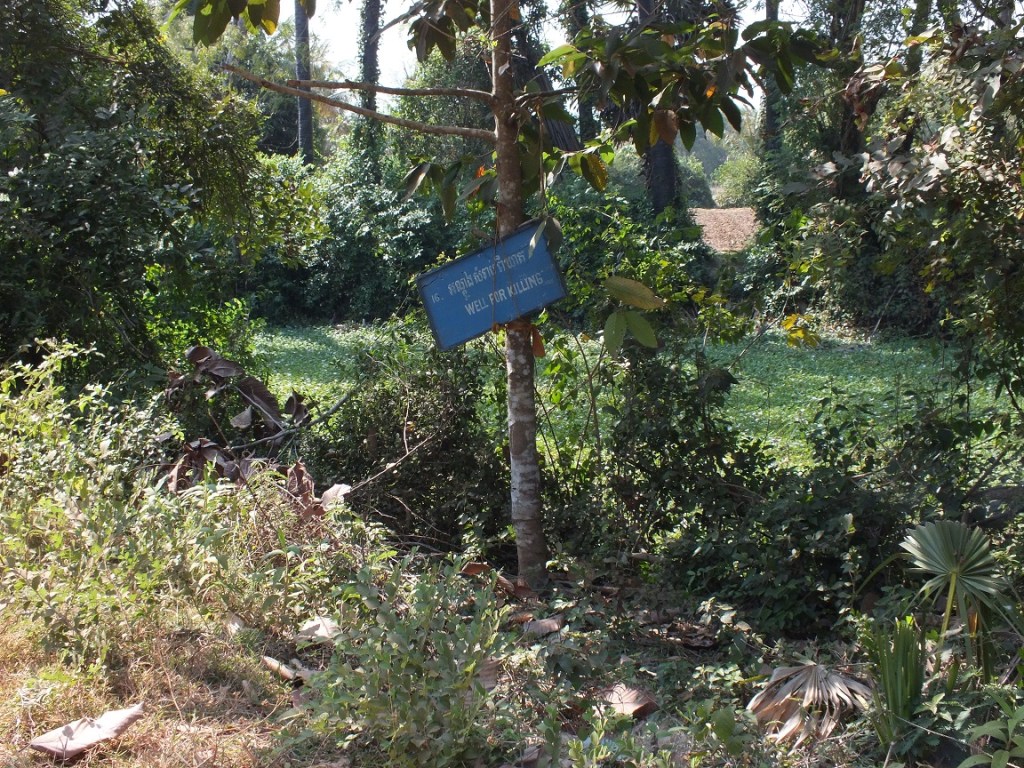
You come across what looks like a makeshift blue notice stuck into an area of scrubland that is probably a pond in the rainy season. It felt like an afterthought, almost a private initiative, but the message was stark and unambiguous: “well for killing”.
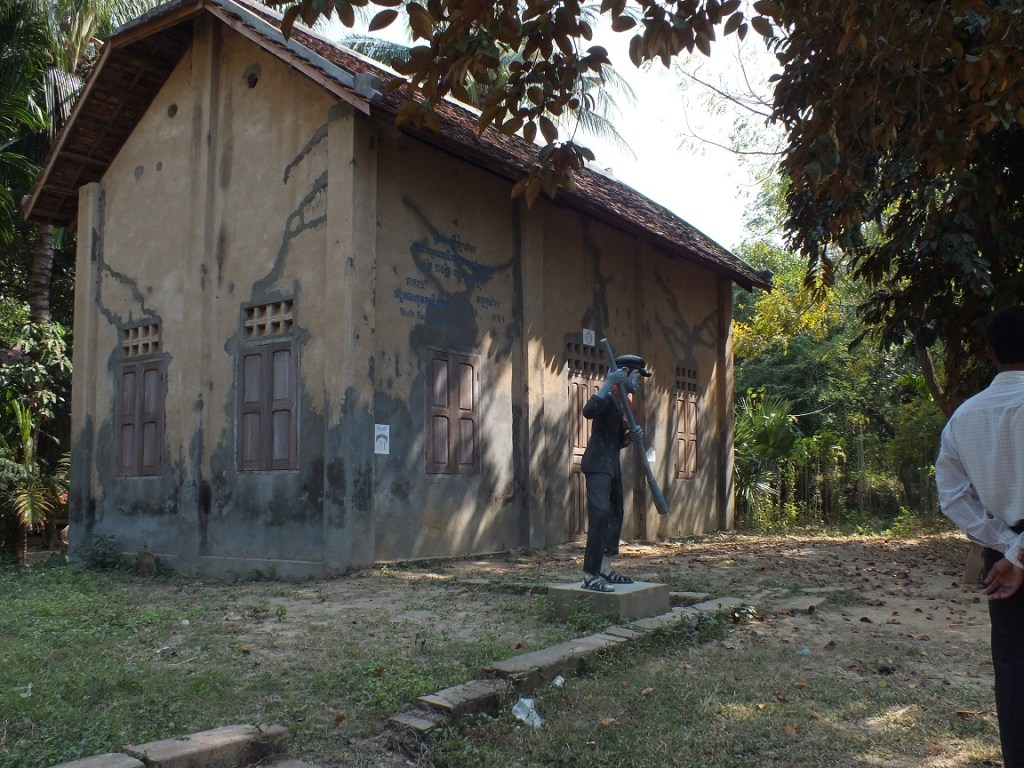
Next on our itinerary was a small plain building with cemented cracks and wooden shutters bearing the inscription: torture museum. It was closed at the time of our visit but the figure at the front of a Khmer soldier armed with a bludgeon gave you some idea of what to expect.
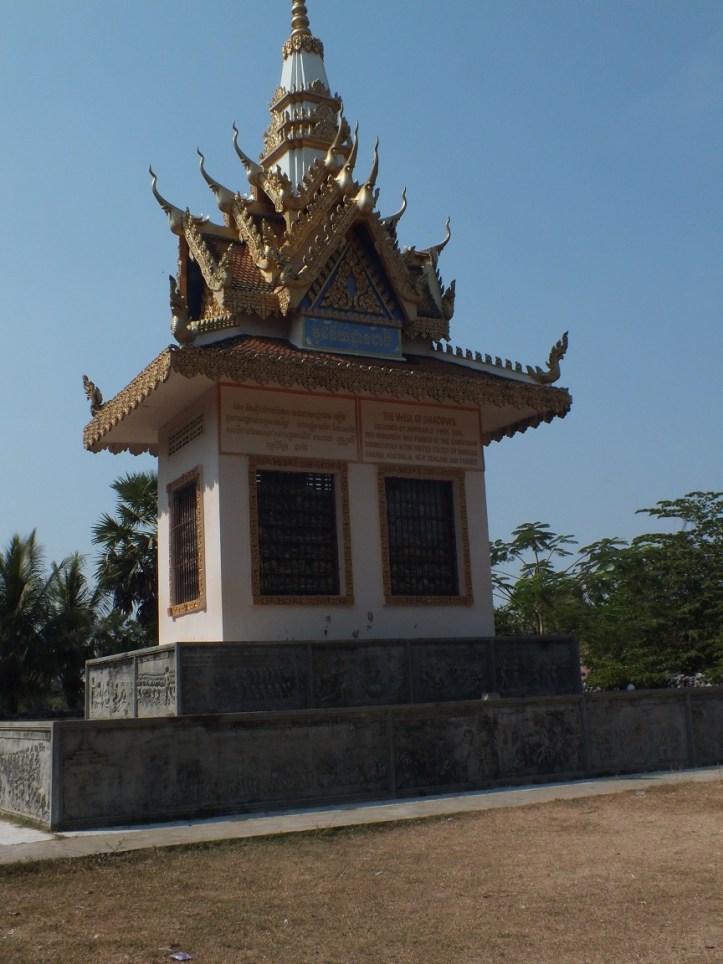
The last and most important structure of the site was a monument immediately recognisable as a shrine.
Funded by Cambodian communities in the US, Canada, Australia, New Zealand and France, it contains skulls recovered from the surrounding area.
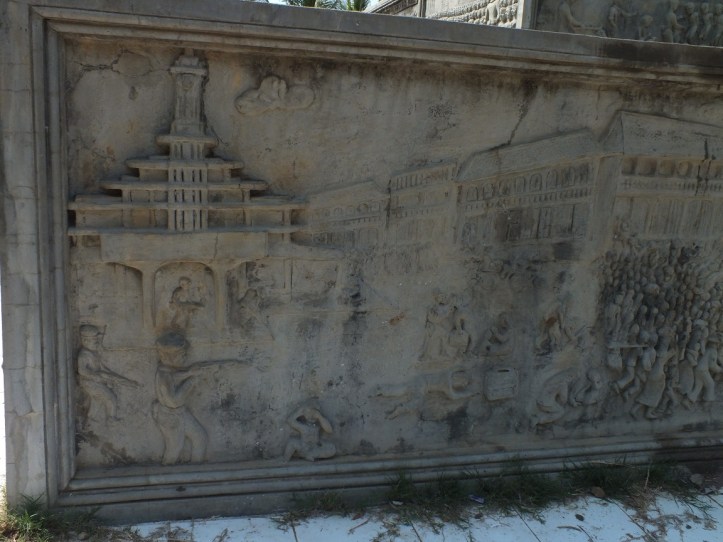
This stupa is unusual in that it sits on two platforms with bas reliefs depicting the torture inflicted on prisoners before their execution: a visual catalogue of the appalling atrocities, including evisceration for cannibalism purposes, inflicted on the 10,008 people believed to have been held here before being executed.
Not many tourists venture here. It is a small place, an unassuming place, much like the people whose lives were brutally ended here. People like Om Pranya’s nephew, one of the locals we interviewed for Then the Khmer Rouge Came.
Phnom Sampeov – BATTAMBANG
Located 15 kilometers from Battambang in more or less the opposite direction to Wat Samrong Knong, Phnom Sampeov is another place said to have seen some 10,000 executions.
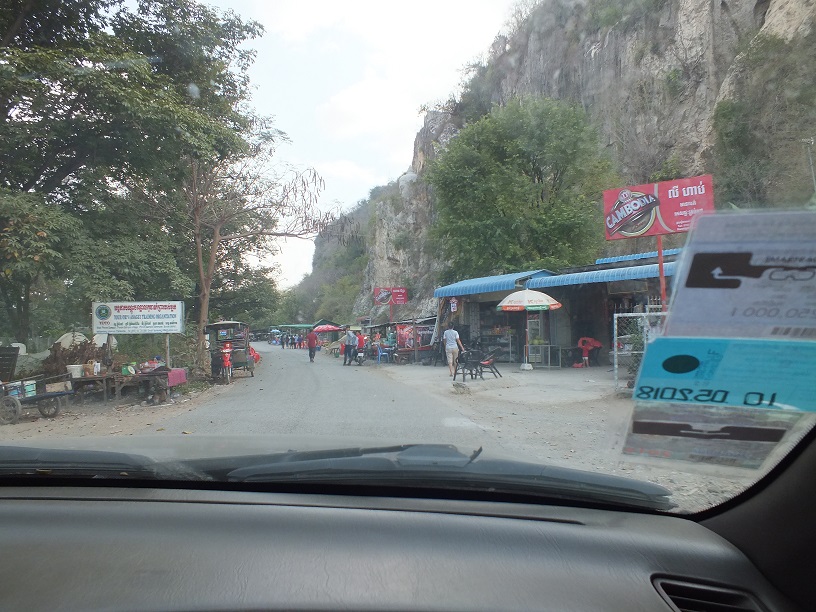
Regularly listed as one of Battambang’s top attractions, not only does this striking limestone outcrop offer panoramic views over the rice paddy fields lying at its feet but it also promises the spectacle of thousands of bats flying out of its many caves in the evening as well as the opportunity, like Wat Samrong Knong but on a grander scale, to visit a complex of temples.
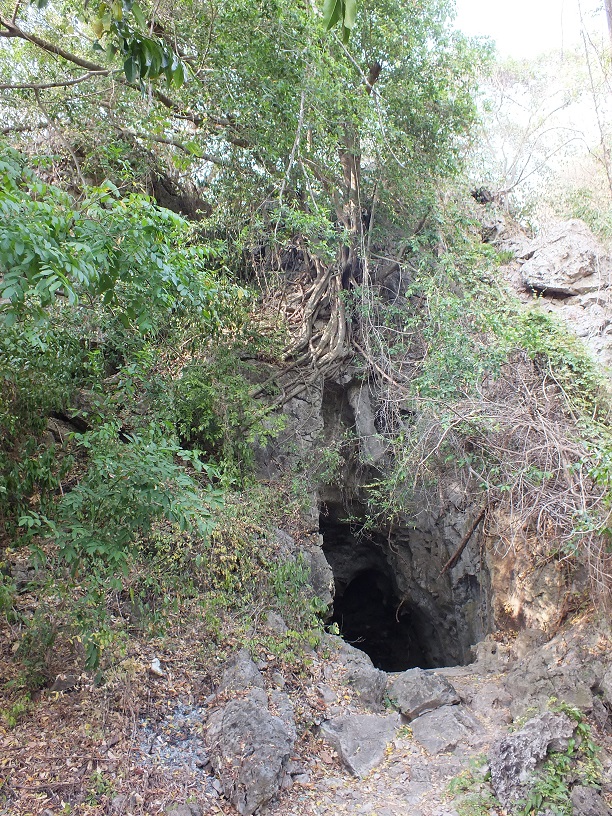
Even so, the execution site itself remains relatively quiet. Contrary to Wat Samrong Knong and Chnung Ek, it is intrinsically chilling, and this gives it greater immediacy. There is no need for you to take in explanations, to imagine what it must have been like during the genocide. Standing above the ‘killing caves’, as the formations are referred to, in front of a gully used to push down thousands of victims is enough.
A set of steps takes you down to the chamber where the bodies were thrown.
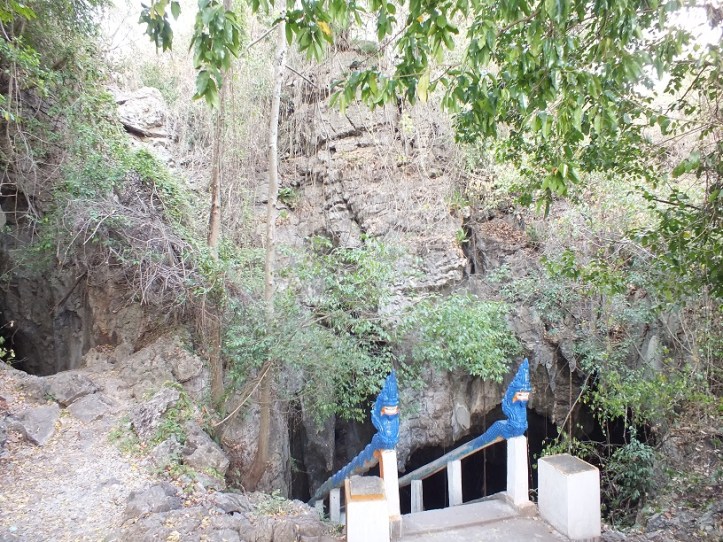
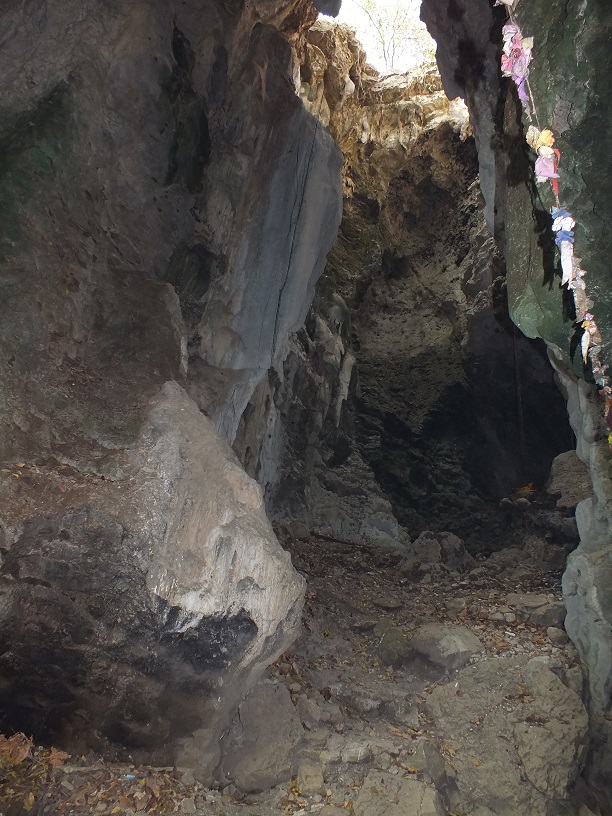
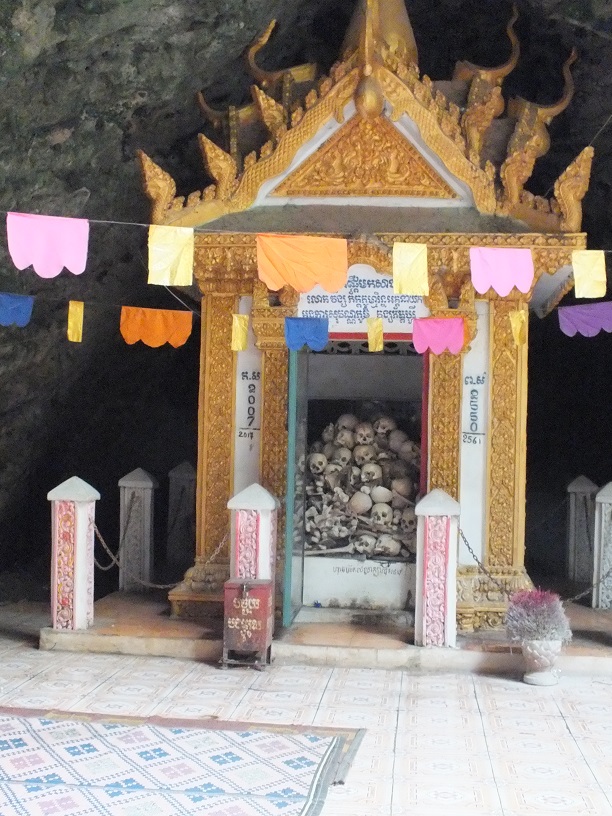
At the back of the chamber you will see a small shrine half filled with skulls.
In the eerie silence of a cave which must have been anything but silent at the time, in the absence of any kind of technology liable to interpose itself between you and what took place here, you are free to find your own way of honouring the memory of the dead.
 Chance to Dream